Reality Capture
I led multiple reality capture projects at Bibliotheca Alexandrina, applying photogrammetry and laser scanning to digitize museum artifacts and heritage sites for documentation, preservation, and public dissemination.
My preferred technology for artifacts digitization is photogrammetry because it delivers the most realistic colors needed for artifacts documentation.
I led photogrammetry projects for collections from several Egyptian museums including: Egyptian Museum, Grand Egyptian Museum (GEM), Egyptian Capitals Museum (ECM).
Resulting 3D models were integrated into mobile museum applications for visitor engagement.
Part of this work was published in 2014 VSMM conference, 3D reconstruction from images for museum artefacts: A comparative study.
Photogrammetry for Museums
Laser Scanning for Museums
Before I settled on photogrammetry, my team and I tested close-range laser scanners on a few selected artifacts from the Egyptian Museum in 2013.
Results were high geometric accuracy but limited color fidelity, an essential aspect in artifact documentation.
Statue from the Egyptian Museum
Laser Scanning for Sites
One of the major projects I led in 2012 was a full scan of the interior of a rock-cut tomb in Luxor, in collaboration with the University of Pisa.
Scanning was done using a Time-of-Flight (ToF) laser scanning.The resulting model was reconstructed from 24 point clouds and used for scientific research purposes.
Scanning and 3D reconstruction workflow was published in the 2013 CIPA symposium, 3D Reconstruction of Ancient Egyptian Rock-cut Tombs: The Case of M.I.D.A.N.05.
Point cloud of the full tomb interior
Photogrammetry for AR apps
I have also led many photogrammetry projects with a completely different purpose which is creating accurate digital replicas of flat artifacts to support image recognition and tracking in AR apps.
Projects included:
Ra-Hotep tomb walls — Egyptian Museum
Yuya papyrus (20m) — Egyptian Muse
Amduat papyrus (5m) — Bibliotheca Alexandrina Antiquity Museum
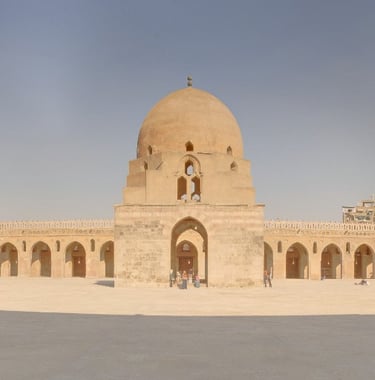
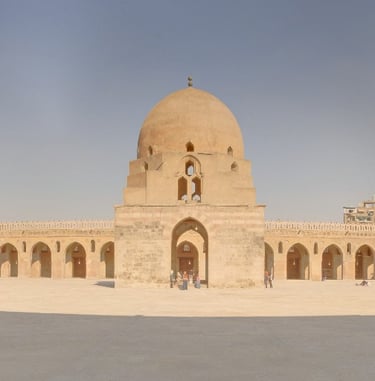
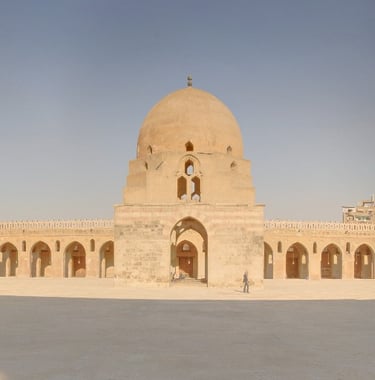
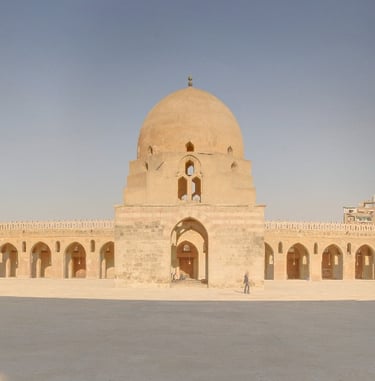
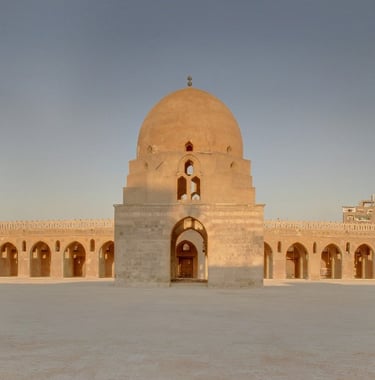
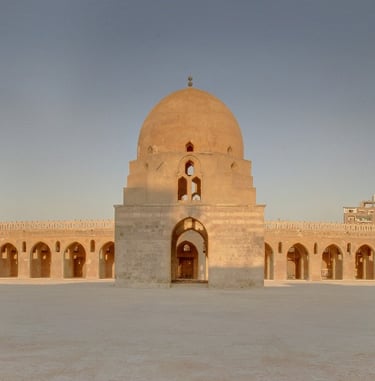
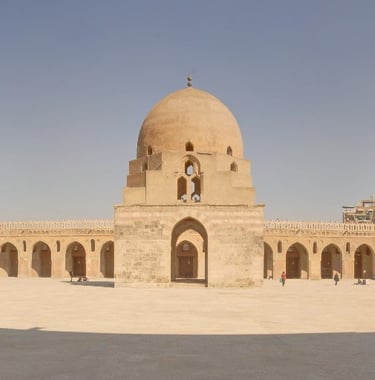
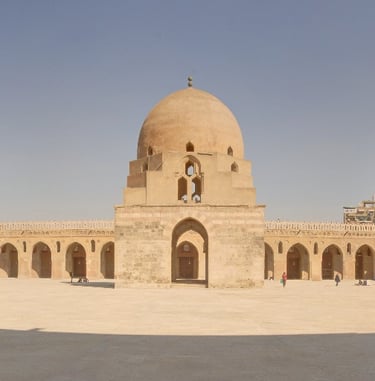
While not 3D, panoramas are an affordable way to represent heritage sites.
I developed a technique that utilizes a motorized panoramic head to capture heritage sites over time. The resulting timelapse panoramas were then displayed on an immersive display system.
Workflow was published in the 18the CHNT conference, Time-Lapse Panoramas for the Egyptian Heritage.